Wealth vs Prosperity
The Rich Create Wealth, But Not Prosperity This isn’t as timely as the current destruction of our democracy, but it’s still important. People make political decisions based on the state of our economy and their own feeling of security and prosperity. Even though I think he’s an overrated corporate Democrat, I do give James Carville some credit for his “It’s the economy, stupid!” phrase many years ago. It is about the economy. People who feel economically stable are not nearly as likely to need scapegoats, believe lies about immigrants, or follow tyrants like Trump who they believe will “Keep them safe.”
So what creates economic security? A thriving middle class, with plenty of opportunity for poorer people to move into that middle class. It’s the spending power of the middle class which drives an economy, with good jobs giving families the money to create demand, which then leads to production and jobs to meet the demand, which then gives us more people with money to spend, and so forth. In my econ classes, I made a very simple circular flow chart: production….leads to….jobs….leads to….people with money to spend….leads to….demand for good and services….leads to….production….
But here’s the problem: for an economy to operate in a manner that produces prosperity, the wealth generated from all of this economic activity needs to be spread out. Enough people need to be making a decent wage to create and maintain that middle class! And up until the 1940s, that wealth was not spread out at all. As the US went through its industrial revolution, a vast amount of wealth was being created, but it was all in the hands of the Rockefellers, Carnegies, Mellons, Frickes, Vanderbilts, Stanfords, etc. They amassed incredible fortunes combining unlimited natural resources, millions of immigrants needing work, new technologies, and a government that refused to intervene on the behalf of working people. Wages were incredibly low, there was no safety or security for workers, and no middle class was being created. Even during the booming economy of the 1920s, over half of all Americans were very, very poor.
So, what turned all that wealth into the prosperity of a healthy middle class? The government. Yes, it was the entity that’s been the whipping-boy of conservatism for the past 45 years that created what used to be the world’s strongest middle class. Unfortunately, one of the Right’s greatest victories has been its vilification of government, leading to a distrust that’s exploded into Trump and MAGAism. More on that later.
How is it that government turned wealth into prosperity? It started with the New Deal. While it’s true that FDR’s alphabet programs didn’t pull us out of the Great Depression, they did lay the groundwork for economic growth. More infrastructure (all the things that business needs but doesn’t want to pay for – roads, highways, bridges, airports, dams) was created by New Deal programs than any undertaking, public or private, before or since. The New Deal also saw minimum wage standards and the legal right to form unions. The FDIC kept families from losing their life savings when banks folded. Social Security provided income for seniors, allowing them to not only keep from starving, but also to continue being consumers.
Then came WWII, with massive government expenditures, breathing life into factories and shipyards, putting money into the hands of workers. Also putting money into the hands of soldiers, who would someday come home and want to spend it.
And then after the war, three things happened that would create the American middle class: first, the GI Bill enabled over 2 million veterans to attend college and well over 5 million to get into vocational training programs; that meant millions of citizens improving their chances of getting good jobs and making enough money to experience financial security. To keep up with the need for more institutions of higher learning, well over 1,000 new colleges were built from 1946-1970. Who built them? Governments, of course.
The second major building block of the middle class was the FHA loan insurance program. FHA didn’t give loans directly, but it insured the loans made by private banks and mortgage companies. Since this reduced the risk for lenders, it was much easier to buy a home. Another plus for consumers was that down payments were much lower and repayment periods much longer. During the 20 years after WWII, approximately 11 million mortgages had been secured through FHA. Additionally, the GI Bill, while thought of solely as a plan to get vets to college and vocational training schools, also included provisions for low-interest, no-down payment loans for home purchases.
Would private industry ever consider building schools, giving money to attend those schools, and providing financial help to purchase homes? Of course not. Unregulated capitalism had clearly shown its true colors until that point: amassing obscene wealth for a few, while viciously fighting gains by working people.
Fortunately, governments did step in and take steps to funnel some of the wealth back to workers. It should be said, however, that most of the benefits I’ve referred to were offered primarily to white people. The GI Bill was frequently administered locally, so many jurisdictions – primarily in the south – could deny African American applicants. FHA and VA loans were frequently denied to Black vets, and racist redlining practices in every U.S. state kept Black families from moving into certain areas. Even in the “liberal” Bay Area, redlining was severe, and having taught there for 30 years, I found it interesting to learn that for many years, Walnut Creek was one of the “whitest” towns in California. What this all meant was that the main avenue to middle class wealth accumulation – home ownership – was denied to them. That’s why wealth distribution is far more skewed than income distribution. Black people may make similar salaries to Whites, but due to historical roadblocks to home ownership, accumulated wealth is far less. You didn’t learn that in many history texts, even before the current erasure of anything that might make white students feel guilty.
But back to government. The last major piece in government creation of a vibrant middle class was the construction of the federal highway system. Yes, more infrastructure for business to use to produce, employ people, make money, produce more, employ more, etc. Millions of workers – many of them trained through GI Bill funded schools – were employed to build the roads that would connect states to other states and the new suburbs to jobs in our cities. The construction was started under President Eisenhower (back when Republicans had enough foresight to realize that investing in the country was actually a good thing) and cost 25 billion over 13 years.
(It’s interesting to note that President Biden’s infrastructure package was the most ambitious since that 1956 highway bill. No other Democrat or Republican had been wise enough to actually think about our country’s future and the role that infrastructural improvements play in economic health. Of course, there was the obligatory screaming about debt, inflation, waste, fraud, blah, blah, blah, but none of those conservative voices are saying anything about the national debt skyrocketing under Trump, with nothing to show for it but grotesquely wealthy people becoming more grotesque.)
So, this has been an econ lesson that I probably spent a week or two on during my teaching years. There’s no denying that unfettered capitalism does create mountains of wealth. But it doesn’t necessarily create prosperity, nor even come close to building a decent society. Go back and look at pictures of the abject poverty amidst “glorious” wealth during the Gilded Age. Check out kids in the mines for 12 hours a day, or factories with one exit during a fire; take a macro-look at how many people were poor, while a few had just about everything. Then government stepped in to improve the lives of workers, and to stimulate economic growth through the New Deal, the GI Bill, VHA and VA loans, building of schools, and construction of the roads we needed to grow.
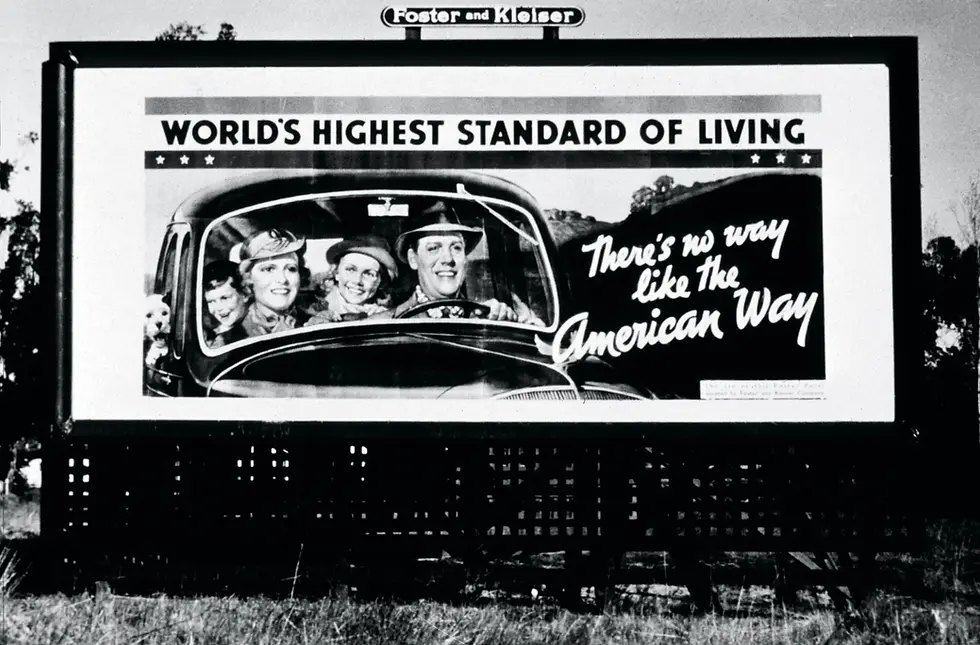
That’s what made our middle class. That’s what most “3rd World” nations have never experienced. And that’s what the Right has attempted to destroy for the last 40 years. After all of the gains made by working people from 1945 into the 1970s, conservatives went on the attack. Reagan swept into office with his anti-government, anti-tax, anti-union message, and the propaganda machine went into overdrive in its glamourization of free-market individualism. Around the same time Reagan took power, Christian conservatives got into the political game with the “Moral Majority.” With intelligence and prescience, Republican leaders were quick to embrace them as allies, seeing that if cultural issues such as abortion, homosexuality, and religion itself could become non-negotiables with a big chunk of the electorate, they would forget all about the increasing economic insecurity and transfer of wealth back to the richest Americans. And not long after that, Rupert Murdoch started Fox News as a supposed counter to a perceived “liberal media bias.” From the beginning, it was a mouthpiece for conservatism in general and the Republican Party in particular. It remains an important channel of misinformation and outright lies about liberalism, the Democratic Party, and the nature of government.
To conclude, I’d like to say that government is flawed. It can be bureaucratic and wasteful. It can be wrong. It can do bad things. But I would contend that most of those things are the result of continued influence and outright control by corporate and other wealthy, powerful interests. It does too little to protect us – not too much. Doing too much would cut into corporate profit; it would upset the billionaire class that doesn’t care one iota for common people – the same class that gets our leaders elected and then pays lobbyists 4-5 figure salaries to convince them that’s what’s best for the rich is best for the country. As Bernie always points out, and I repeat, it’s disgustingly undemocratic. It’s also bad for the overall economy and the prosperity people remember from the 50s/60s, but do not share in now.
Prosperity comes from a blending of public and private interests; a good-old American entrepreneurial spirit and drive for innovation, with government putting breaks on the capitalist tendency to exploit and accumulate wealth that the vast majority doesn’t benefit from. Without laws passed by legislators who were pushed hard by progressive forces, there would still be sweatshops, kids in the mines, no safety for workers, no Social Security or Medicare, no ______, no ______, no ______ (you fill in the blanks). And without massive government investment in infrastructure, home ownership, and human development (schools and GI Bill), we would still have an economy like that of 100-150 years ago, with a few people owning everything and most folks just barely getting by. We’re headed back there – for many, we’re already there. Inequality in the distribution of America’s wealth is now worse than it’s ever been in our history, and economic inequality is worse in the U.S. than any other advanced industrial nation. With Trump at the helm, this obscenity will become far worse. Without some big, bold changes, prosperity and the economic security it brings will be a forgotten American dream.
Comments